- Simplified AI: Stay Ahead in the AI Revolution 🚀
- Posts
- 🤖 1 in 5 UK Boys Date Chatbots
🤖 1 in 5 UK Boys Date Chatbots
Plus, Smartglasses Finally Ready for Market
Sponsored by


Welcome back, AI Admirers!
Breaking News: A UK study finds that many teenage boys are forming romantic relationships with AI chatbots, sparking debate among parents, educators, and child safety experts about the psychological and social impact.
Get ready to dive into the latest happenings in AI.
📢 Today's Headline:
UK Teens Turning to AI Partners
Smartglasses Could Replace Phones
Pope Warns on AI Power
6 Gadgets That Simplify Cooking
Latest AI Tools & Resources
Today’s Poll and Results
Read time: 3.5 minutes!
Growth by Revenue Band
What 2,000 SaaS Companies Reveal About Growth in 2026
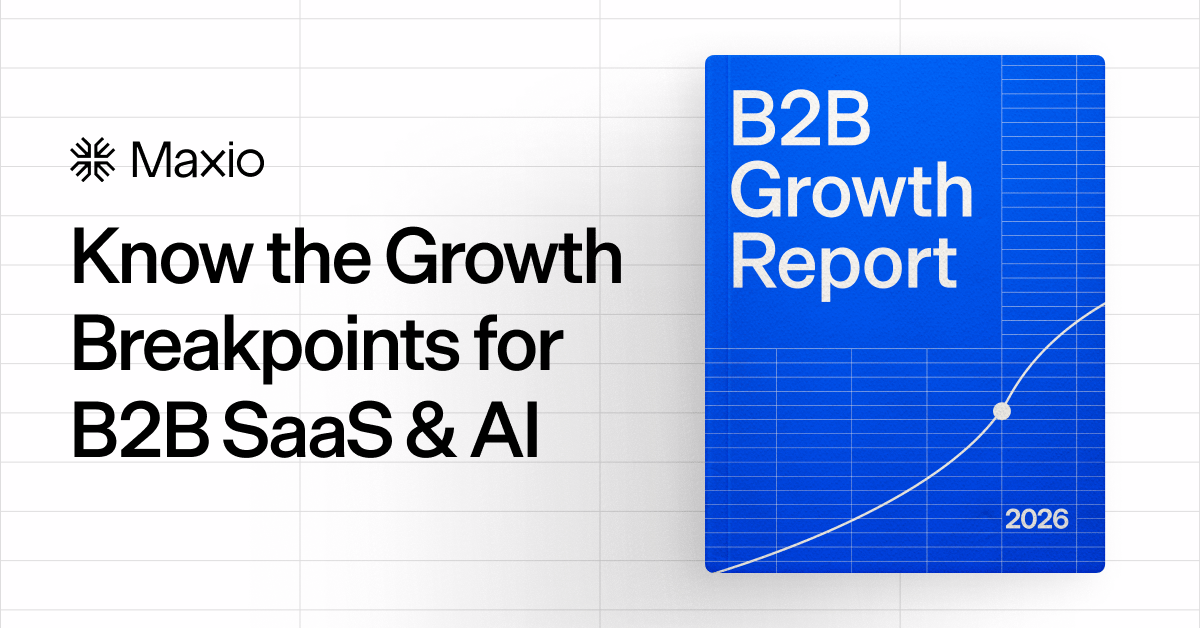
Is your growth in-line with your peers in B2B SaaS & AI?
Benchmark yourself against actual billings data for Maxio’s 2000+ global customers, alongside firsthand company perspectives to understand how growth varied by company size, business model, and strategic focus.
Key takeaways from the report:
Average growth across 2,000 companies
Growth by revenue band
AI-led vs AI-enhanced. Who performed better?
Hand-picked News
We are quietly breeding a generation of socially isolated men who prefer the predictable comfort of code over the messiness of human connection.
The control factor: A staggering 58% of boys admit they prefer AI relationships because they can completely control the conversation and mould their "partner's" looks and responses on a whim.
Family is losing ground: Over a third (36%) of young guys openly state they would rather talk to a chatbot than open up to their own family or friends.
The darker side of the algorithm: The same study revealed that nearly 1 in 10 boys aged 12–16 have already used AI tools to create non-consensual sexual images of their peers.
This isn't happening in a vacuum; the data shows 81% of these boys turn to the internet simply because they feel there are no physical spaces left for them in the real world.
⚠️ The big picture: When young men spend their formative years dating submissive, algorithmic entities that never push back or disagree, we are setting up a massive collision course with reality. Expect to see a widening gap in basic human communication skills, and a severe crisis in real-world dating as a generation realizes real people don’t come with an edit button.
If you have a son, younger brother, or nephew, skip the generic tech lecture. Instead, try bringing them into a physical hobby space or asking them point-blank what they think about AI relationships—you might be surprised by how much they are craving a real, judgment-free conversation.
Silicon Valley’s ultimate hardware gamble is finally paying off
Your phone might soon live inside a pair of lightweight sunglasses
Tech giants poured billions into this financial black hole—and someone finally figured it out
The secret weapon behind Google’s massive comeback in wearable tech
Why the next era of spatial computing won’t require a massive ski goggle headset
Smart glasses have spent a decade acting as a massive financial drain for tech companies, but a major hardware pivot means the industry is finally hitting its true inflection point.
Ditching the heavy onboard battery: Project Aura glasses manage to stay incredibly lightweight by offloading the computer and battery to a phone-shaped pocket "puck" connected by a discreet wire.
The software ecosystem is actually ready: Instead of clunky, custom software, the new frames run directly on a specialized Android XR platform and hook into AI for real-time, hands-free context.
The path to profitability is in sight: The manufacturer has aggressively cut marketing spend and raised margins, positioning itself to break even and launch an IPO.
The sudden shift in momentum is heavily driven by consumer behavior shifting toward lighter wearables, proving that users care far more about day-to-day comfort than total virtual reality immersion.
👀 The big picture: The era of clunky, isolated VR headsets is losing ground to practical, everyday spatial computing. With an IPO on the horizon, these new hardware layouts are turning glasses into a legit productivity tool—meaning your next mobile workstation might just be a pair of shades.
If you want to understand how spatial layouts change productivity, try opening three browser windows side-by-side on your desktop right now; that exact panoramic field of view is what these lightweight glasses are now bringing to a standard coffee shop setup.
The sweeping new document on artificial intelligence shifts the entire debate away from technological capabilities and directly onto the concentration of global power.
An antitrust critique in disguise: Instead of obsessing over killer robots or rogue software, the text focuses heavily on how a tiny handful of massive corporations are using opaque algorithms to monopolize wealth and influence public thought.
The threat of cognitive colonialism: The document explicitly warns that letting private companies completely control data and digital infrastructure creates a dangerous new form of colonial dominion over regular people.
Ethics frameworks are not enough: The text directly challenges tech companies boasting about internal guidelines, stating that a moral system is totally meaningless if its rules are determined by just a few executives.
The document lands at a highly volatile moment, serving as a direct counterweight to political administrations pushing for rapid, unregulated tech growth in the name of national economic strategy.
⚠️ The big picture: The conversation around artificial intelligence is officially moving past safety testing and into the realm of human rights and corporate sovereignty. Watch for global regulators to use this high-profile moral backing to push for much stricter public oversight and break up the centralized control of foundational models.
If you want to understand how concentrated this infrastructure really is, take a quick look at the underlying cloud providers powering your favorite tools; you will quickly see that almost the entire ecosystem relies on just three or four massive corporate pillars.
Quick Hits
🔥 New Tools & Resources
🔥 Yansu - AI that learns how you work and turns it into software
🔥 Unabyss - MCP-native self-updating context layer for your AI
🔥 Gamma - Create unlimited presentations, websites, and more in seconds.
🔥 Unlimited Prompts - Get 10k+ ChatGPT prompts now.
🔥 own.page - Make your own personal website with bento tiles
From our partner
10x the context. Half the time.

Speak your prompts into ChatGPT or Claude and get detailed, paste-ready input that actually gives you useful output. Wispr Flow captures what you'd cut when typing. Free on Mac, Windows, and iPhone.
🚨 Quick Poll
Today’s Poll:
Do you think teens should be allowed to have AI “girlfriends”? |
Vote today, see the results tomorrow!
Previous Poll:
Should powerful AI tools like Claude Mythos be released publicly?
A) Yes – They can help everyone find and fix bugs faster – 54% 🏆
B) No – Too risky if misused – 46%
Bottom line: the debate isn’t about whether AI is useful, it’s about whether we’re ready to handle the risks that come with unleashing it.
SPECIAL BONUS
The smartest minds don’t waste time on newspapers.
They read newsletters - curated, ad-free, straight to the point.
Want in?
Get premium news for FREE with the Meco app!